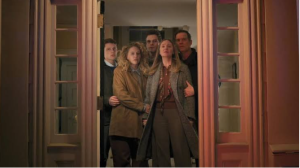
Furioza Again 2025 Movie Review
“Furioza Again,” the highly anticipated 2025 sequel to the Polish crime thriller Furioza, marks a fierce and emotionally charged return to the gritty underworld that captivated audiences in the first film. Directed once again by Cyprian T. Olencki, this continuation dives deeper into the lives of men haunted by loyalty, betrayal, and violence, exploring the devastating effects of toxic brotherhood and the cyclical nature of vengeance. Set several years after the events of the original, Furioza Again expands its narrative scope while retaining the raw, kinetic energy that made the first installment a standout in the Polish action landscape. The result is a film that feels both familiar and evolved—more introspective, more tragic, and ultimately more resonant. It is not just a sequel for fans of brutal street brawls and gang warfare, but a complex meditation on redemption, masculinity, and the cost of living by a code that no longer belongs in a changing world.
The story picks up with Dawid (Mateusz Banasiuk), now a man living in the shadows, grappling with the ghosts of his past and the fallout from the events that shattered his gang and his family. After betraying the Furioza brotherhood to save his loved ones, Dawid has spent years trying to rebuild his life under a new identity. Yet, as the film opens, it’s clear that peace is only temporary. When a series of violent incidents between rival hooligan factions erupts once again across the city, Dawid is pulled back into the chaos he tried to escape. This time, the lines between friend and foe are even more blurred. The old gang has splintered into factions—some seeking vengeance for past betrayals, others looking for profit in the criminal underworld’s shifting power dynamics. A new leader, played with chilling precision by Tomasz Schuchardt, emerges to fill the vacuum, turning the once unified group into a ruthless machine driven by profit and bloodlust rather than the misguided sense of honor that defined the original Furioza.
Olencki’s direction remains a key strength. He demonstrates once more his gift for balancing kinetic, bone-crunching action with human emotion. Every punch and every brawl in Furioza Again carries dramatic weight; the violence is not gratuitous but cathartic, serving as an external expression of the characters’ inner turmoil. The fight choreography is spectacular yet grounded—raw, visceral, and filmed with documentary-like realism. The camera often lingers on the aftermath of violence: bruises, trembling hands, shattered bottles, and blood-soaked clothing. The cinematography, by Bartosz Bieniek, is remarkable in its grim beauty. The color palette is washed-out and cold, dominated by greys and deep blues, reflecting the emotional desolation of the world Dawid inhabits. There’s a haunting melancholy that seeps through every frame, reminding the audience that this is not just a film about crime, but about the erosion of identity and humanity.
At its core, Furioza Again is about the search for redemption. Dawid’s arc this time feels more mature, more desperate. Banasiuk delivers an even more layered performance than in the first film—he’s no longer the naïve ex-gang member trying to do the right thing, but a man who has realized that redemption is not a destination but a struggle without end. His portrayal captures the fatigue of someone burdened by guilt, yet unable to stop fighting. There’s a haunting quiet in his eyes, a sense of resignation that makes his every action—whether violent or tender—feel tragic. The return of Lena (Weronika Książkiewicz), now working as a social worker trying to help at-risk youth, adds emotional complexity. Her relationship with Dawid, strained yet intimate, becomes the moral heartbeat of the film. Their scenes together provide relief from the relentless tension, yet they’re never sentimental. Lena’s compassion contrasts sharply with Dawid’s self-loathing, highlighting the film’s central conflict: the impossibility of escaping one’s past when the past refuses to let go.
The supporting cast, too, deserves high praise. Schuchardt’s portrayal of the new gang leader, nicknamed “Kosa,” is terrifying in its calmness. He embodies a new generation of criminals—calculated, emotionless, and driven by money rather than brotherhood. His cold pragmatism clashes with Dawid’s fading loyalty to old codes, creating a fascinating dynamic that underpins the film’s thematic evolution. Meanwhile, several returning characters, including Golden and Ryszard, have evolved in unpredictable ways. Golden’s descent into paranoia and drug addiction serves as a tragic mirror to Dawid’s struggle for salvation, while Ryszard, now a police informant, embodies the moral decay that comes with survival in such a world. Each subplot feels purposeful, feeding into the overarching narrative of moral compromise and disillusionment.
One of the most impressive aspects of Furioza Again is its refusal to glorify violence or criminal life. Olencki presents this world with brutal honesty, emphasizing the consequences of every decision. The film spends ample time showing the toll of violence not only on the perpetrators but also on their families, communities, and minds. Mothers bury sons; children grow up idolizing dead criminals; entire neighborhoods crumble under the weight of senseless vendettas. This realism sets Furioza Again apart from many action sequels that fall into the trap of spectacle over substance. Here, the action is never detached from emotion. Every fight means something. Every gunshot echoes with personal history. The editing, crisp yet deliberate, keeps the pacing taut while allowing moments of quiet reflection to breathe.
Thematically, the film delves deep into questions of masculinity and identity. In a post-pandemic, economically fractured Poland, the world these men inhabit feels even more unstable. The gangs are no longer united by ideology or football allegiance; they are fragmented reflections of a society struggling with loss, anger, and disillusionment. Olencki uses this backdrop to explore the toxic myth of brotherhood—the idea that loyalty and violence can provide belonging in a world that offers little else. Dawid’s ultimate realization—that true strength lies in breaking free from this destructive code—becomes the film’s moral anchor. Yet the film never preaches. It trusts its audience to wrestle with ambiguity, to see that redemption may be possible but not without sacrifice.
The soundtrack by Michał Lorenc perfectly complements the film’s tone, blending melancholic piano motifs with heavy percussive beats that underscore the tension of key scenes. The music often fades into silence at critical emotional moments, allowing the weight of the performances and dialogue to take center stage. The sound design, too, enhances the realism—punches sound dull and heavy, not cinematic; gunfire is deafeningly close; the ambient city noises give the film an immersive sense of place. These small details make Furioza Again feel less like a stylized crime movie and more like a raw, lived experience.
If there’s a criticism to be made, it’s that Furioza Again occasionally indulges in its own bleakness. At over two hours, the relentless tone and grim atmosphere can be emotionally exhausting. Some viewers may wish for more moments of levity or hope. However, in the context of the story being told, this darkness feels honest rather than gratuitous. Olencki isn’t interested in offering comfort; he wants the audience to feel the full weight of Dawid’s world, and in that respect, the film succeeds brilliantly. The final act, a harrowing confrontation between Dawid and Kosa set in an abandoned factory—a symbolic graveyard for the ideals that once defined their generation—is both physically and emotionally shattering. Without spoiling specifics, the ending walks a fine line between tragedy and catharsis, leaving viewers with lingering questions rather than neat resolutions.
What truly elevates Furioza Again beyond the typical crime sequel is its emotional intelligence. Beneath the grime and blood, this is a film about people—broken, flawed, yearning people trying to reclaim meaning in a world that has forgotten them. Olencki’s decision to focus on character rather than pure action pays off immensely. The violence shocks, but it’s the quiet moments—Dawid staring into a cracked mirror, Lena tending to a wounded boy, Golden weeping over a photograph—that haunt the viewer long after the credits roll. The film’s closing image, ambiguous yet poetic, encapsulates everything Furioza Again stands for: the endless cycle of violence, the faint glimmer of hope, and the fragile possibility of change.
In conclusion, Furioza Again is a triumph of modern Polish cinema—a brutal, beautiful, and deeply human story that transcends its genre trappings. It builds upon the foundation of the original while expanding its scope and emotional depth, delivering a sequel that feels necessary rather than opportunistic. The performances are raw and authentic, the direction bold and confident, and the writing unflinchingly honest. It is not just an action film or a gangster story; it is a meditation on guilt, forgiveness, and the haunting persistence of one’s past. For those who admired Furioza for its raw realism and moral complexity, this sequel will not disappoint. It’s darker, more introspective, and ultimately more rewarding—a film that proves redemption may be elusive, but the fight for it is what makes us human. Furioza Again stands as a testament to the power of Polish filmmaking to tell universal stories through local truths, and it cements Olencki as one of Europe’s most compelling directors of contemporary crime drama.