Murder Before Evensong Review 2025 Tv Show Series Cast Crew Online
Murder Before Evensong, which premiered on Acorn TV (and later on Channel 5 in the UK) in the autumn of 2025, is a six-episode British crime drama adapted from the first novel in Reverend Richard Coles’s Canon Clement Mysteries.Set in 1988 in the fictional village of Champton, the series mixes the cosy with the unsettling, combining church politics, family secrets, and murder in a small rural community.
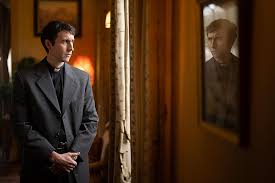
At the centre is Canon Daniel Clement, played by Matthew Lewis, who lives with his widowed mother Audrey (Amanda Redman) in the rectory, along with their two dachshunds Cosmo and Hilda.Daniel’s proposal to build a lavatory in the old church (an apparently modest improvement) ends up being the spark that exposes long-hidden resentments, conflicts over tradition and change, and skirmishes over power within the parish.The discovery of Anthony Bowness, a cousin of the church’s patron Bernard De Floures, found dead in the church—stabbed with pruning shears—draws Daniel into a formal murder investigation alongside DS Neil Vanloo (Amit Shah) even as he wrestles with the church’s internal strife and his own doubts about who to trust.
One of the strongest features of Murder Before Evensong is its atmosphere. There is a clear effort by writer Nick Hicks-Beach and director David Moore to evoke late-1980s England in a way that feels lived in rather than stylised. The set-pieces—the church, the rectory, the small village community—are detailed: the décor, music, technology (or the absence of it), and social norms of the time are used to build a world where secrets can hide but also where communal bonds are fragile.The dialogue often balances dry humour with moral seriousness, especially in moments where Daniel’s pastoral role requires empathy, but his sense of justice pulls him toward involvement in things beyond sermons. Lewis’s performance as Clement is sympathetic: he conveys a man of faith whose steadiness is tested by betrayal, threats, and the moral ambiguity inherent in investigating one’s own parishioners.
Supporting-characters are also a high point. Audrey, the mother, is more than a comic foil or interfering parent; although opinionated and meddlesome, she brings emotional complexity and her relationship with Daniel adds warmth and occasional tension. The De Floures family—Bernard, his children Honoria and Alex—are layered rather than flat, with private struggles, generational divides, and ties both of loyalty and resentment. Secondary figures, like the twin sisters Kath and Dora facing mortality, or the handyman Nathan with a potentially scandalous romantic thread, add depth to the village tapestry. These subplots sometimes threaten to distract from the central murder plot, but they also enrich the show, allowing it to breathe, to show its people, not just its puzzles.
On the downside, pacing is a recurring criticism. To fill six hour-long episodes, some stretches slow, with scenes that feel more concerned with character-building or sociocultural comment than driving the mystery forward. There is a sense in places that the series is trying to juggle “coziness” and atmospheric suspense, but hesitates between them. Viewers who prefer lean, twisty mysteries may find the slower interludes between clues and revelations to be indulgent. Also, certain thematic critiques have been raised: the show’s treatment of the Anglican hierarchy, tradition vs reform, and communal faith life can lean toward finger-wagging, which sometimes undercuts subtlety. It may resonate strongly with those familiar with church politics or British rural parish life, but for others some of the conflict feels overdetermined.
Another potential limitation is in the chemistry of the investigation partnership. Canon Clement working alongside DS Vanloo has promise, but some reviewers feel the interplay is not yet as vivid or tension-filled as in some classic cleric/cop pairings in British crime dramas. There are moments where Vanloo’s complaints about Clement’s involvement (his compassion, his connections) create friction, but the emotional stakes between them could be pushed further.
In terms of mystery structure, Murder Before Evensong does many of the things one wants from a “whodunit”-style series. It plants clues and red herrings, it uses local history (including references to World War II, espionage, wartime secrets) to weave a larger past into present wrongdoing. The revelations involving hidden skeletons, threats, and betrayals are satisfying especially when the narrative takes its time to show how small actions and longstanding grudges could lead to tragedy. Some twists are predictable, but others catch off-guard, especially as secrets that seem peripheral (or merely atmospheric) turn out to matter.
Visually and tonally the show lands somewhere between the polished comfort of a pastoral drama and the shadows of darker mysteries. The cinematography and production design serve both: lush landscapes, the quiet of church interiors, fog or dusk lighting, etc., are used to good effect. Music and sound help too—nothing too showy, but enough to build suspense without spoiling the cosy-mystery feel. The 1980s setting allows little nostalgia touches without resorting to overuse of retro tropes, which helps the series feel more authentic.
Overall, Murder Before Evensong succeeds not by reinventing the genre, but by doing what cosy/church-centred mysteries do well, and doing them with care. Its strengths are its characters, its moral gravity, its setting, and a willingness to let the investigation sit alongside the lives of ordinary yet troubled people. For those willing to accept slower pacing and an emphasis on atmosphere over relentless plot twists, it offers a rewarding watch. For others hoping for breakneck suspense or highly twisty detective work, the show may drag a little. But as a piece of comfort-crime, combining church, community, and crime in a way that feels both familiar and fresh, it is more hit than miss. Murder Before Evensong may not redefine mysteries, but it enriches them.