The Smashing Machine 2025 Movie Review
Headlining action-movie idol and wrestler Dwayne Johnson drops “The Rock” from his identity in all senses to reveal a heartfelt core in Benny Safdie’s nimbly executed and oddly endearing “The Smashing Machine.” Johnson, rarely considered a quote-unquote serious actor but most certainly a bona fide movie star thanks to the “Fast and the Furious” films and an abundance of popcorn outings often dismissed by critics, emotionally strips down to play pioneering MMA fighter Mark Kerr in the hole of painkiller addiction while trying to mount a post-rehab comeback.
Safdie’s first solo-directed feature after helming episodes of TV’s “The Curse” and creatively breaking up with his brother Josh sounds like the stuff of awards-season bait: An actor going out of his range to play a tortured athletic soul, physically transformed in a steroidal, vein-bulged-muscles sense, on the rocky path to redemption.
But “The Smashing Machine” is not that, nor is it “The Wrestler,” either (but that a Bruce Springsteen song also plays in this film at a moment of Mark’s rock bottom will put you in the headspace of Darren Aronofsky’s melodrama). Safdie’s film is rather a sweet duet between a remarkably unembellished Johnson and a blazingly good, blue-collar and freshly blown-out Emily Blunt as his codependent girlfriend and eventual wife Dawn Staples-Kerr.
Johnson is an ideal match for Safdie and the material, bridging without sensation or cloying affect the disconnect between who Mark is in the octagon (intimidating, undefeated, all primal machismo energy) and who he is outside the cage (wounded, insecure, cauliflower-eared). All of that is to say while “Smashing Machine” doesn’t play like easy awards catnip, Johnson earns a sizable position among this year’s prize-seekers.
While a creative parting of ways has seen mixed success for other auteuristic brother-director pairings (see: the Coens) and makes you wish the gang would just get the hell back together again, Safdie’s solo outing post-Josh stands on its own. It also signals hopes for when his brother premieres another A24 movie, “Marty Supreme,” in December. The script here is a little undercooked, as “The Smashing Machine” is more a vibe than a fists-up drama in fighting form, but Johnson and Blunt balance a screen chemistry effervescent enough to compel you to wonder if maybe “Jungle Cruise,” their last collaboration and seemingly another cynical Johnson cash-grab, was actually… good?
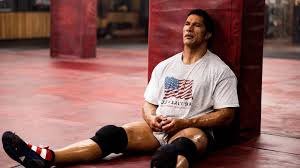
“A day without pain is like a day without sunshine,” says Mark Kerr, who made his MMA debut at the World Vale Tudo Championship 3 in São Paulo in 1997 and didn’t lose a fight until Pride 15 in Japan in October 2000. That sense of invincibility, however, is a suit of armor, as outside the octagon (where the mixed martial art plays out), he’s nursing a dependency on opioids that frequently leads to him mentally dropping out, his eyes gone dark.
There’s also a torrent of rage in him that, when triggered into reaction by a needy and dejected Dawn who tends toward feeling shut out, trips a grenade within and risks doors being torn off their hinges in the middle-class Arizona ranch he shares with her. When he elicits painkillers after a fight gone bad and is only offered Advil, he adorably asks Dawn, “Would you like some?” But the ask, the minor panic over a craving unsated, also indicates a scratchy need that may gouge him out.
Their bittersweet romantic dynamic is what makes “The Smashing Machine” so unexpectedly poignant for a high-pressure sports biography about a UFC fighter. “I think I miss taking care of him,” Dawn tells a friend after he checks into an outpatient clinic, hoping for 30 clean days before his next fight in Japan. Safdie shoots on-location in Tokyo, wending DP Maceo Bishop’s handheld, docudrama-style camera — and “The Smashing Machine” can often tend toward resembling a docu- or even mockumentary about a sensitive athlete — through the narrow-alleyed Golden Gai district of shanty pubs whose low ceilings Johnson (who, at 6-foot-5, is a few inches taller than the real Mark Kerr) could likely never clear.
Adding to that documentary-like stamp is an ensemble of first-time actors, such as MMAer Ryan Bader as Kerr’s rival-turned-coach Mark Coleman (his acting inexperience is apparent, but it gradually manages to bring authenticity to the picture). Then, there’s a suite of modern-day fighters making their screen debuts as Kerr’s most worrisome adversaries, including Oleksandr Usyk and Satoshi Ishii. As “The Smashing Machine” spans 1997 to 2022 in a nifty but distracting fourth-wall-breaking cameo, some of these fights and their gruesome particulars lose specificity in their own shuffle, but outside the octagon is when “The Smashing Machine” is most engrossing.
It’s not a shock that Safdie’s naturalistic style and abilities are better applied to human drama than gladiatorial gut-punches and jiu-jitsu kicks; what I think he’s trying to do here is subvert the grandiose violence of similar movies. Poetic flourishes buoyed by Nala Sinephro’s ambiently riff-some jazz score, which often works antithetically to the toughness of the images onscreen, almost find the movie daydreaming in space the way Mark does when on an opioid high (which here looks more like a low).
Safdie has completely reverse-engineered the high octanes of his other co-directed movie about a man on a rampage, “Uncut Gems,” for a soft-spoken piece more aligned with the wandering asides of his often harshly funny TV satire about performative do-gooders, “The Curse,” co-created with Nathan Fielder. And the “Nathan for You” and “The Rehearsal” creator’s droll fly-on-the-wall style occasionally seems to have influenced Safdie here, though Benny and Josh were already holding tight on vérité, medium-shot discomfort in early films like “The Pleasure of Being Robbed” and “Daddy Longlegs.”
Johnson here, upholstered in prosthetics and varying wigs and noses and bruises, is neither hero nor antihero, but neither is he a toxic-tempered Jake LaMotta out of Martin Scorsese’s touchstone fighter drama “Raging Bull.” Safdie asked Johnson to get puffier, rather than bigger — how do you make Dwayne Johnson bigger, anyway? — with a tiny waist and oversized traps that often make the actor look deliberately too overstuffed for his own body, a life-sized teddy bear who’s taken to too much CrossFit.
Johnson’s performance is out-and-out wonderful, a beady-eyed fusion of body and spirit that osmoses Safdie’s sensibility to deliver what can’t be disputed as the most layered work of the actor’s career. A vividly contradictory Blunt, funny and sad especially in articulating Dawn’s conflicted response to Mark’s post-rehab emotional about-face during a tense argument, is equally sensational.
“All you’re giving me are leftovers when you say it’s time for dinner,” she says, a line that seems at first profound until Mark asks where she read that one. Ultimately, you emerge out of the gentle afterglow of “The Smashing Machine” with a rejuvenated respect for Johnson, and maybe even a keenness to revisit his crassest box-office slop (hello, “Red One,” you corporation-crafted Christmas lump of coal, you) to rediscover what was under the sinews of his blockbuster bloodsport all along.