The Groomsmen: Second Chances 2025 Movie Review
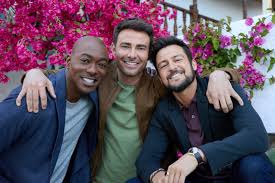
The Groomsmen: Second Chances (2024), directed by Ron Oliver and written by Rick Garman, is the second entry in the Hallmark+ trilogy that follows three lifelong friends — Pete, Danny, and Jackson — as they navigate love, friendship, and identity across different cultural and relational landscapes.In this installment, the focus is on Danny (Jonathan Bennett), a former pro baseball player turned coach, who is also in a close professional relationship with Zack (Alexander Lincoln), his friend and business manager. Zack is engaged to Nolan, a lawyer, and is making wedding plans in Greece. Danny, harboring deep feelings for Zack, must reconcile his own emotional truth while balancing his loyalty and the worldview—personal and societal—that has shaped his understanding of himself.
One of the strongest features of Second Chances is the chemistry between Bennett and Lincoln. Their interactions are convincing, layered by years of friendship, both on-screen and off, and the film uses this to explore what it means to love someone who may not see you that way—yet. Bennett’s Danny is earnest, vulnerable, and conflicted in ways that feel authentic, not just romantic-plot-necessary. At the same time, Lincoln’s Zack, though initially more guarded and committed to his engagement, is also rendered with enough complexity to make his eventual emotional awakening credible. Supporting roles—including Nolan as the engaged partner whose work and detachment become crucial tension—play their parts in highlighting the stakes of emotional honesty.
Aesthetically and structurally, Second Chances leans heavily into rom‑com traditions. The script is predictable in its major beats: conflict, confession, crisis, and resolution, in that order. Audiences who follow romance or Hallmark movies will not be surprised by Zack’s sudden change of heart, nor by the wedding scenes, dramatic gesturing, or the picturesque Greek landscapes. Nevertheless, it’s not the surprises that make the film work, but the sincerity with which it delivers them. The picturesque venue in Greece, the visual beauty, and the emotional music underscore the stakes. The film’s 84‑minute runtime ensures it never overstays its welcome.
Thecore theme of the movie — coming to terms with one’s feelings, the tension between friendship and romantic love, and the risk it takes to speak honestly — is handled with a tender touch. Danny’s internal struggle is compelling: he is not merely pining, but trying to be a good friend, finding ways to be there, suppressing, over‑compensating, even avoiding his own truths. Observing his loyalty toward Zack, and the ways Zack depends on Danny (in planning, in emotional partnership) sets up a tension that doesn’t feel forced. When the wedding-planning chaos arises — Zack’s venue closing, Nolan’s busy schedule, last‑minute searches for caterers and locations — those are not just plot machinations but ways to test relationships, to see what boundaries hold, what pressures break, and what honesty demands.
Where the movie sometimes struggles is in its handling of certain supporting characters and dramatic pacing. Nolan, for example, often comes off as less fully realized — his character is mostly defined by his absence, busyness, and inability to emotionally show up rather than by layers of motivation or inner conflict. This makes his eventual role in the love triangle feel more like a foil designed to amplify Danny’s worth than a fully fleshed person. Some viewers may find parts of the dramatic conflict forced or overly theatrical — e.g. the “best man confessing on the altar” moment, while emotionally satisfying, leans heavily into melodrama. Additionally, the stakes at times seem lightened by the rom‑com frame: because we expect a happy ending, some of the tension feels like it’s there to check off boxes rather than to deeply challenge characters.
Another noteworthy dimension is the representation. The film breaks away from some conventional LGBTQ+ romantic tropes by giving main screen space and narrative agency to a gay male lead who is neither caricatured nor peripheral. Danny is not defined simply by being gay; rather, his identity intersects with his past as an athlete, his friendships, his professional life, and the complexities of love — all without hand‑wringing over coming out or trauma, which many audience members appreciate. The film treats his romantic feelings with the same sensitivity and normalcy that many Hallmark romances reserve for straight leads. This contributes to its resonance. It also won the GLAAD Media Award for Outstanding Film in the Streaming/TV category, which speaks to both its cultural impact and how well it handles its LGBTQ+ subject matter.
Emotionally, Second Chances works best when it surrenders to sincerity rather than spectacle. The more intimate scenes (Danny alone struggling, Danny and Zack moments of quiet hesitation, emotional confession) are more affecting than the big wedding gesture. The film’s cinematography and music support these moments rather than distract, which helps. The location in Greece, while mostly serving the romantic ideal, also mirrors Danny’s emotional journey: always beautiful, but uncertain, full of potential pitfalls (like venue closures) and moments of clarity (like confession, resolution).
On balancing representation and universality, Second Chances hits many of its marks. While the romance is same‑sex, the story frames it as just another form of love, not a sensational exception. Because the friends’ dynamics, the wedding preparations, the romantic longing, the stakes of not speaking up — all of these are universal themes, the film becomes accessible beyond niche audiences. Viewers seeking representation will appreciate seeing a gay lead whose romantic journey and emotional life matter; viewers who simply enjoy a sweet romance will find ample reward in the setting, the humour, the earnestness.
That said, the film is unlikely to satisfy those looking for subversive romance or a version of rom‑com that radically restructures the genre. Its predictability and occasional formulaic approach are part of both its strength and its weakness — strength because they bring comfort, because the viewer knows what emotional punches will land; weakness because they may lessen the impact of the conflicts or make the resolution easier. The movie does not push boundaries aggressively. In particular, the pacing in the second act slows under the weight of drama that could have been lighter; some of the supporting cast are under‑utilized; some plot conveniences are evident (e.g., resolution of engagement, sudden change of heart) in ways that strain credibility if examined too closely.
Overall, The Groomsmen: Second Chances is a warm, attractively produced, emotionally honest romantic comedy that enchants more by integrity of feeling than by dramatic surprise. It succeeds largely because its lead performances are heartfelt, because it treats its LGBTQ+ storyline with respect, and because it wraps its romance in universal truths about friendship, longing, and the courage to admit what one feels. For viewers willing to accept a familiar framework in favor of emotional resonance, it’s a rewarding watch; for those wanting more daring narrative turns, it may feel safe, but sometimes safe is exactly what a story of love needs.