Beauty in Black Season 2 Review 2025 Tv Show Series Cast Crew Online
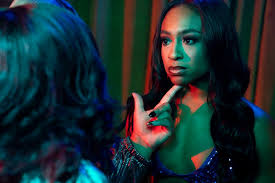
“Beauty in Black” Season 2 (Part 1), which premiered on September 11, 2025 on Netflix, continues the bold, melodramatic, power‑struggle heavy saga that defined the first season.The show picks up with Kimmie (Taylor Polidore Williams) stepping fully into her new role as Chief Operating Officer of the Bellarie beauty empire after marrying Horace Bellarie (Ricco Ross), thereby becoming both his wife and the one in control of much of the company.
From the start of Season 2 Part 1, the stakes are higher. Kimmie, formerly underdog and exotic dancer, is now in a position of authority, but has to face resistance not just from external threats but from within the Bellarie family—Horace’s children, Mallory, Jules, and others who believe they are entitled to power.She is forced to navigate betrayals, threats, and dangerous alliances while also trying to protect those she cares about, like her sister Sylvie and friend Rain.
Part 1 invests heavily in building tension through both corporate intrigue and personal danger. One of the dramatic peaks is the storyline involving Angel (Xavier Smalls), who is the target of a hit ordered by Horace, but who survives and hides out—creating suspense about who knows what, about loyalty, about the vulnerability of those around him.Another is the power dynamics between Kimmie and Mallory (Crystle Stewart), whose rivalry becomes sharper now that Kimmie is not only a threat to Mallory’s influence in the business but also a new kind of family authority figure.
Visually and stylistically, the show maintains a lot of what viewers enjoyed in Season 1: lush settings, heightened drama, bold costume and set design, and frequent, sharp tonal shifts—moments of tenderness and genuine emotional confrontation interspersed with over‑the‑top betrayals and cliffhangers. There is an embrace of the soap‑opera tradition: twists, revelations, dramatic reversals, and surprises. The pacing in Part 1 is uneven—some arcs move briskly, others drag—especially when we are waiting for payoffs on back assaults, secrets being revealed, or characters’ loyalties being tested.
The thematic core remains about identity, power, and what one is willing to do to protect loved ones while ascending. Kimmie’s journey from being looked down upon to being “the boss” is one of the more compelling arcs, especially when juxtaposed against her moral compromises: choosing whether to fight dirty, when to trust, whom to align with, and how far to go. There is also a recurring motif of family legacy, entitlement versus earned power, and how the wealth and glamour of the Bellarie empire masks a darker, more toxic underbelly—including secrets, violence, and trafficking.
In terms of performances, Taylor Polidore Williams continues to carry much of the show. Her Kimmie is more confident, more dangerous, though not without vulnerability; she is compelled to make hard decisions, sometimes with morally ambiguous outcomes. Crystle Stewart’s Mallory remains a formidable foil—she is wounded by Kimmie’s rise, resentful, scheming, but also sometimes sympathetic, especially when her own position seems under threat. The supporting cast—names like Debbi Morgan, Richard Lawson, and Xavier Smalls—fill out the landscape of the Bellarie family with spiky tension and occasional emotional resonance. Some characters—especially in the secondary limbs of the plot—feel underdeveloped; their motivations are clearer when the plot demands confrontation but murky in the quieter moments.
One of the satisfying things in Part 1 is that the show doesn’t shy away from paying off its buildup. The finale of Part 1 brings several plot threads to a boil: the attempted hit on Angel (who survives under pretence), Kimmie asserting power openly, familial conflict becoming explicit, and hints of unexpected alliances.These moves ensure that the viewer not only sees the consequences of earlier power shifts but also senses that nothing is safe and that loyalties might change at any moment.
However, there are also weaknesses. Some aspects of the show feel derivative—power struggle in a rich family, betrayal, secrets, shadowy dealings—these are familiar tropes, especially in Tyler Perry’s oeuvre. For viewers who expect novel plot devices or nuance, certain arcs may feel predictable. The pacing issues emerge especially when too many subplots run in parallel without sufficient weight—some storylines feel more like filler or delay mechanisms rather than substantive character development. Dialogues sometimes lapse into melodrama that borders on excess; at times emotional beats are undercut by overacting or by sudden shifts in tone. Also, while the show ambitiously sets up many threads, a number of supporting characters are underutilized: their backstories or emotional stakes are not always explored deeply, reducing some conflicts to surface‑level antagonism.
In terms of cultural impact, the show continues to draw viewers: the popularity of Beauty in Black led Netflix to commission the episodes in full (the multiple parts) early on because of strong viewership; it has ranked in global top 10s, and because of its ambition in centering a Black female protagonist rising through abusive, exploitative systems, and the visual aesthetic of wealth vs struggle, it resonates with an audience that enjoys high‑drama storytelling with moral complexity.
What makes Season 2 so compelling so far is the tension between empowerment and the costs of it. Kimmie’s rise is fraught: she gains status, control, visibility—but also danger. Her enemies multiply, both obvious and hidden. She must protect not just herself, but family and associates who may be collateral damage. The question of whether she can maintain her moral core (if she has one) while playing a game with entrenched players is central. The narrative also probes questions of loyalty, trust, betrayal, and whether power is ever “clean” in a milieu defined by secrets, violence, and legacy.
Overall, Season 2 Part 1 of Beauty in Black is a gripping continuation of the first season’s momentum. It expands what was set up earlier, elevates conflict, delivers performances that make the sometimes‑outlandish plot feel invested, and offers enough surprises to keep the audience engaged. It isn’t without flaws—uneven pacing, occasionally over the top dialogue or moments, possibly under‑written secondary characters—but these do not derail the experience. For those who enjoyed the first season, Season 2 Part 1 mostly delivers what was promised and more.
If I were to give a summary verdict: Beauty in Black Season 2 Part 1 is a strong, if imperfect, chapter in the saga. It takes Kimmie to a new level, raises the stakes, and sets the stage for major confrontations. Fans of high‑drama soap‑style series with moral ambiguity, family betrayal, and suspense will find much to enjoy; those hoping for subtlety or tight realism may find it overshot.