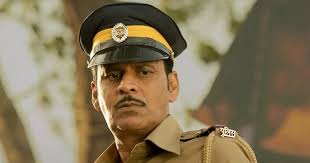
Inspector Zende 2025 Movie Review
Inspector Zende, released on Netflix on September 5, 2025, takes a bold and atypical route in adapting the real-life saga of Mumbai Police Inspector Madhukar Zende’s pursuit of serial killer Charles Sobhraj—here fictionalized as Carl Bhojraj. Rather than dwelling in somber procedural territory, writer-director Chinmay Mandlekar steers the story into offbeat comedy-thriller territory, a tonal gamble that’s as intriguing as it is uneven
Set against the backdrop of Bombay in the 1980s, the film begins with Bhojraj’s audacious escape from Tihar Jail, courtesy of a drugged feast for the guards—an audacity every bit worthy of its real-life inspiration Enter Inspector Zende (Manoj Bajpayee), a weary but determined lawman, summoned once again to confront the man he had captured years earlier. What unfolds is less the tension of a nail-biting thriller and more the picaresque charm of a comedy of errors, where crime-fighting cops feel more like lovable underdogs than practiced sleuths
Mandlekar’s decision to recast a dark and convoluted real story in slapstick-light tones is at once refreshing and precarious. On one hand, it becomes a quirky retelling that leans into humor—sometimes inventively, sometimes awkwardly. On the other, the script wavers, neither fully committing to satire nor delivering the emotional heft some viewers might expect from such a storied case
Where the film truly shines is in Manoj Bajpayee’s performance. Tasked with the difficult balance of a world-weary, disciplined officer and a seemingly bumbling detective, he manages to imbue Inspector Zende with warmth, earnestness, buried frustration, and quiet resolve all at once. Critics across the board have praised how Bajpayee anchors the film, keeping it lean, watchable, even when the tone falters For many, he’s the reason the rubes occasionally land—without him, several reviews argue, the film might have stumbled entirely.
Opposite him, Jim Sarbh’s Carl Bhojraj provides a suave but cartoonish foil. His interpretation never emerges fully as a chilling predator; instead, he remains a playful, mocking presence—more mischievous trickster than malevolent force. In some ways, Sarbh’s performance underscores the film’s broader miscalibration: a story that might be too whimsical for its gravity, and too superficial for its mythic underpinnings
Beyond the leads, the supporting cast brings texture and charm. Girija Oak, as Zende’s wife, adds a grounded emotional center, reminding the audience that behind the badge lies a man anchored by domestic life. Sachin Khedekar’s DGP adds gravity, offsetting the silliness of the police squad—who feel more like a local comedy troupe than investigators chasing a serial killer. These ensembles offer moments that land more reliably than the film’s broader comedic arcs
Rotten Tomatoes shows a consensus: engaging in parts, largely sustained by Bajpayee’s steadfast presence, though held back by repetitive storytelling On social media, sentiments vary—some viewers calling it a “light-hearted, family‑friendly true crime drama… Bajpayee is hilarious,” while others criticize its tone and writing
Was it appropriate to play Sobhraj’s story with such levity? For some, yes. The film exposes a little-known hero in a unique, accessible way. For others, the misappropriation of darkness for comedy feels tone-deaf. Given prior true-crime adaptations—such as The Serpent or Black Warrant—which leaned into Sobhraj’s menace, the comedic skirting here can feel incongruous
The film does, however, highlight pivotal real-life factoids: Zende’s breakthrough came from a distinctive peacock-green motorcycle and a restaurant phone clerk’s tip leading to his arrest of Sobhraj in Goa in 1986—moments of actual police ingenuity that ground the absurdity in real human endeavor
In sum, Inspector Zende is less a gripping reenactment and more a whimsical caper featuring one of Indian cinema’s finest actors at his dependable best. Where its script falters in tone and depth, Manoj Bajpayee—and to an extent, a charming and quirky supporting ensemble—lends it momentum and heart. The film is at its best when anchored by personal moments, character interplay, and the unlikely earnestness of a comedic police chase. Yet it never quite invests in its own mythos, instead skimming the surface of what could have been a layered homage to both law enforcement and audacious criminal legend.
If you’re looking for a light, breezy Netflix watch that delivers amusing performances and nostalgic visuals, Inspector Zende may offer enough charm to justify a viewing. But if you’re expecting a taut true-crime suspense or a political-historical biopic, this won’t satisfy. The film oscillates between sweet and slippery, a nostalgia‑tinged comic ride more than a serious portrait. And in the end, it may be remembered not for pushing boundaries, but for giving us one more chance to marvel at Bajpayee’s ability to elevate even the most uneven material.